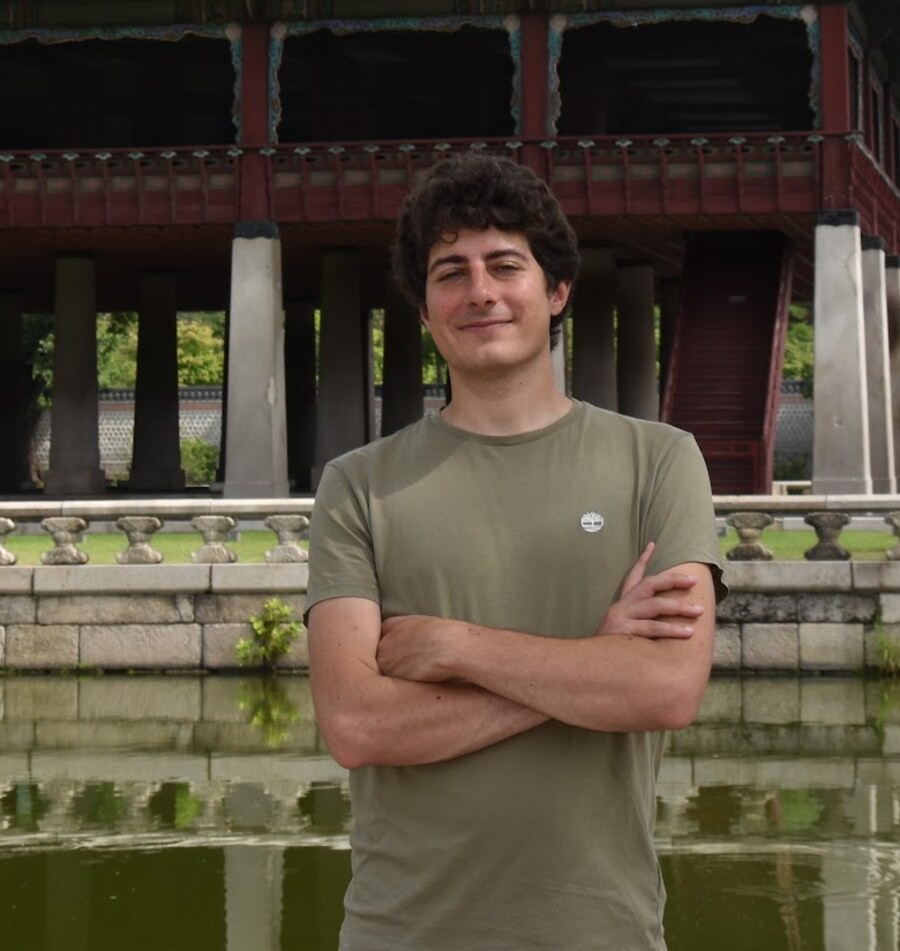
Hiring 2 PhD + 1 postdoc positions on AToM ⚛︎ at Imperial. Deadline for applications: on a rolling basis (PhDs), 30/9/26 (postdoc) Express interest Details
  • adaptive memory and tokenization in foundation models (see my NeurIPS 2024 tutorial on dynamic sparsity): I aim to redefine the units of computation of foundation models by adaptively compressing the sequences of their hidden representations and memory. This allows models to tokenize raw, modality-agnostic data end-to-end, learning hierarchical abstractions. Simultaneously, it provides the foundations for permanent model memories and inference-time hyper-scaling.

  • modular deep learning: I am interested in designing neural architectures that route information to specialised modules (e.g., sparse subnetworks). This facilitates systematic generalisation and conditional computation.

  • computational typology: I wish to understand how languages vary, across the world and its cultures, within a computational framework. Multimodal models in particular give us a powerful tool to study how form depends on grounded, embodied representations of meaning and function.

Between 2022 and 2026, I have been an assistant professor (lecturer) at the University of Edinburgh. I spent time between 2024 and 2025 as a visiting professor at NVIDIA. Previously, I was a visiting postdoctoral scholar at Stanford University and a postdoctoral fellow in computer science at Mila - Quebec AI Institute in Montreal. In 2021, I obtained a PhD from the University of Cambridge, St John’s College. Once upon a time I studied modern literature at the University of Pavia. Deep in my heart, I am still a humanist: some of my favourite writers are Italo Calvino, Ursula Le Guin, and Lucretius.

My research is currently supported by ERC, ARIA, and various gifts/compute from Google DeepMind, NVIDIA, and NatWest. I also received a research faculty award from Google and Best Paper / SAC Highlight Awards at ACL, EMNLP, and RepL4NLP. I am a board member of SIGTYP, the ACL special interest group for computational typology, a Scholar of the European Lab for Learning and Intelligent Systems (ELLIS), and part of the TACL journal editorial team.

Lab Members

PhD students (main supervisor)

Piotr Nawrot from 2022, with Ivan Titov adaptive memory and sparse attention for efficient inference
Nina Gregorio from 2023, with Sharon Goldwater grounded linguistic typology
Osman Batur İnce from 2024, with Oisin Mac Aodha efficient massively multimodal models
Farid Adilazuarda from 2025, with Lexi Birch adaptive memory and multicultural world modelling
Monica Sekoyan from 2026, with Marek Rei

PhD students (co-supervisor)

Yifu Qiu from 2022, with Shay Cohen world modelling and latent actions in vision-language models
Benjamin Minixhofer from 2023, with Ivan Vulić tokenizer-free and byte-level language models
Giwon Hong from 2023, with Pasquale Minervini compositional skills
Zeyu Huang from 2024, with Ivan Titov post-training
Paul Martin from 2024, with Nigel Collier PEFT transfer

Alumni

Emile van Krieken postdoc, 2023, with Pasquale Minervini and Antonio Vergari Assistant professor, Vrije Universiteit Amsterdam
Andreas Grivas postdoc, 2025, with Antonio Vergari Postdoc, University of Edinburgh
Coleman Haley CDT PhD, 2021, with Sharon Goldwater Postdoc, KU Leuvel
Hanxu Hu MRes, 2023 PhD, University of Zurich
Iyngkarran Kumar MRes, 2024 Researcher, Google DeepMind

Media